The Quiet Magnet Wire Demand Behind Solar Power
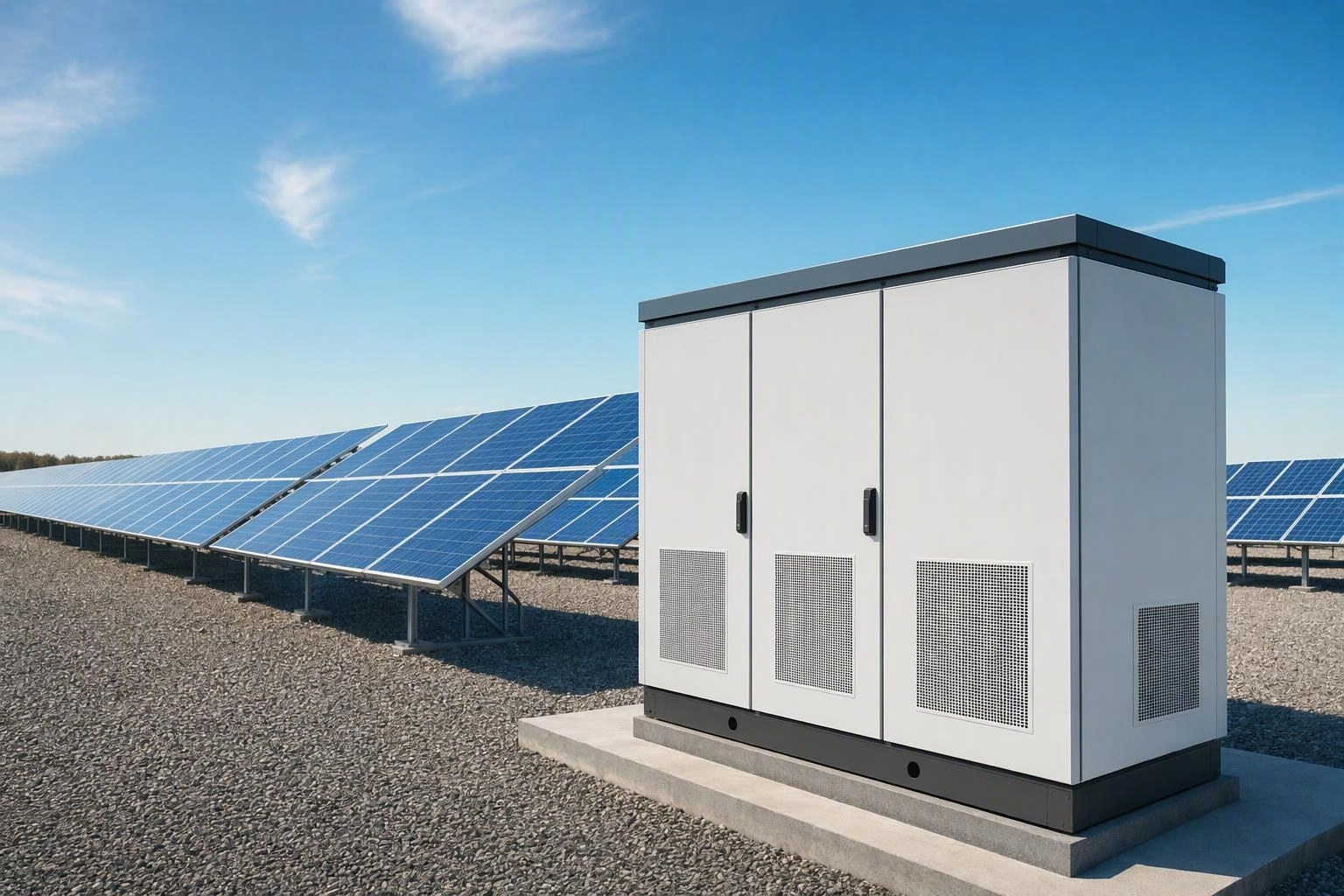
When people discuss photovoltaic systems, attention goes to panels and cells. Yet a solar installation contains a surprising amount of wound copper: inverter cooling fans, auxiliary pumps, transformer windings, filter inductors and, increasingly, the motors inside battery energy storage cabinets. Each of these places a specific demand on the enameled wire used.
The common thread in photovoltaic and storage equipment is duty profile. These systems are expected to run for years with very few shutdowns, often in outdoor enclosures where ambient temperature is high and dust or humidity is present.
Where Enameled Wire Appears in a PV System
- Inverter cooling fans — continuous operation, wide ambient range, low noise requirements.
- Inductors and filter chokes — high frequency ripple current, demanding low loss and stable inductance.
- Isolation and step-up transformers — sustained thermal load, strict dielectric requirements.
- Battery storage thermal management — circulation pumps and fans that must operate reliably at high cell-pack temperatures.
- Tracking and positioning drives — intermittent duty with outdoor exposure.
Thermal Class: The First Decision
Inverter enclosures frequently reach internal temperatures that would be unusual in a controlled factory environment. A fan motor that is rated class 130 on paper may be operating close to its limit on a hot afternoon in a desert installation. Specifying class 155 or class 180 wire for these positions is a common and inexpensive way to add service margin.
For transformer and inductor windings, the calculation is driven by load profile and cooling method. Where natural convection cooling is used and the enclosure is sealed against dust, a higher thermal class is often the most economical way to achieve the desired life without adding active cooling.
Insulation Build and Dielectric Margin
Solar equipment operates at DC link voltages that are high enough to make turn-to-turn insulation quality important, particularly in the primary side of transformers and in filter windings exposed to switching transients. The relevant parameters are not simply breakdown voltage on a straight sample, but:
- Build thickness and concentricity, which determine how evenly dielectric stress is distributed.
- Pinhole count, which indicates coating continuity.
- Dielectric strength after bending, since windings are formed after the wire is insulated.
- Adhesion after thermal ageing, which predicts whether layers separate after years of cycling.
Enamel Type Trade-offs
| Type | Class | Strengths | Typical use in PV equipment |
|---|---|---|---|
| Polyurethane (UEW) | 130–180 | Solderable without stripping, good flexibility | Small fans, sensor coils, low power auxiliary windings |
| Polyester (PEW) | 130–180 | Good general purpose balance of cost and performance | Fan motors, pumps, general windings |
| Polyester-imide | 180–200 | Higher thermal margin, good chemical resistance | Transformers, inductors, hotter enclosures |
| Polyamide-imide composite | 200–220 | Very high thermal and mechanical performance | Compact high-load transformers, premium inverters |
| Aluminium / CCA conductors | 155–220 | Lower weight and cost, adequate conductivity | Non-critical auxiliary windings, cost-driven designs |
Why Aluminium and Copper-Clad Aluminium Appear in This Sector
Solar equipment is cost-sensitive and often weight-sensitive, particularly for rooftop and tracking systems. Aluminium and copper-clad aluminium enameled wire offer a way to reduce conductor cost and mass in auxiliary windings where maximum conductivity is not essential. Copper-clad aluminium, in which an aluminium core is metallurgically bonded to a copper skin, provides a middle path: solderability and surface conductivity closer to copper, with weight and cost closer to aluminium.
The engineering caution is that aluminium requires different termination practice, because oxide formation and thermal expansion differ from copper. Designers who select aluminium wire should confirm that the termination method has been validated for the application, not simply carried over from a copper design.
Practical Procurement Points
- State the thermal class with the ambient temperature assumption that produced it.
- Request partial discharge or surge test data where the winding sees switching transients.
- Confirm the wire diameter tolerance in terms of overall diameter, so that winding machine settings transfer.
- Ask for consistency data across batches, not a single certificate of analysis.
- For outdoor installations, confirm resistance to hydrolysis and to the humidity cycling expected in the enclosure.
Supplying This Sector at Scale
Huaya Fa produces enameled copper, aluminium and copper-clad aluminium wire from 0.03 mm to 6.00 mm equivalent range, with monthly capacity of approximately 3,000 tonnes across two manufacturing bases. Wire grades span class 130 to class 240, covering the full range of photovoltaic auxiliary and transformer applications, with ISO 9001, ISO 14001, RoHS and REACH compliance documented per shipment.
Because solar programmes scale quickly, buyers in this sector value supply stability as much as technical specification. Confirming capacity and lead time at the quotation stage avoids the situation where a design is frozen around a grade that cannot be delivered at the required volume.


