The Problem Introduced by Variable Frequency Drives
The widespread adoption of variable frequency drives brought major efficiency and control benefits, and it also introduced an insulation failure mode that had previously been rare in low voltage machines. Pulse width modulation produces output voltage with very fast rise times. When this switched waveform travels along a cable to the motor, impedance mismatch causes reflections that can multiply the voltage seen at the motor terminals.
Inside the winding, voltage is not distributed evenly. The first few turns of a phase can experience a disproportionate share of the transient, creating local stress far above what a sinusoidal supply would produce.
What Partial Discharge Does to Enamel
Where the local field exceeds the partial discharge inception voltage of the insulation system, small discharges occur in the air pockets and voids within and around the enamel. Each discharge erodes a tiny amount of material. Repeated millions of times, this produces:
- Pitting and roughening of the enamel surface.
- Progressive thinning of the coating at the point of highest stress.
- Eventual breakdown between turns, usually near the phase ends rather than in the middle of the winding.
The failure signature is characteristic, and it is why a standard enamel that performs perfectly on a sinusoidal supply can fail prematurely on an inverter drive even when thermal conditions are benign.
What Corona-Resistant Insulation Actually Does
A corona-resistant enamel does not prevent voltage spikes. It changes how the insulation responds to them. The approaches used include:
- Inorganic filler loading in the outer enamel layer, which increases resistance to discharge erosion.
- Multi-layer composite construction, in which each layer contributes a different property such as thermal stability, mechanical toughness or discharge resistance.
- Controlled surface conductivity, which reduces the field concentration that initiates discharge.
The practical outcome is that the time to failure under the same electrical stress is substantially extended, which is what matters for the service life of a drive-fed machine.
When Corona-Resistant Wire Is Justified
| Situation | Conventional enamel | Corona resistant grade |
|---|---|---|
| Direct on line supply, low voltage | Adequate | Not required |
| Inverter drive, short cable, low switching frequency | Usually adequate | Consider for long life targets |
| Inverter drive, long cable or high switching frequency | High risk | Recommended |
| High DC link voltage or multi-level drive | High risk | Recommended |
| Hermetic or sealed motor with limited cooling | Risk elevated by temperature | Recommended |
| Aerospace, rail or safety critical duty | Generally unsuitable | Standard practice |
Related Specification Decisions
Corona resistance is one part of a system. Other decisions that influence whether a drive-fed motor survives include:
- Thermal class, because discharge activity accelerates with temperature. A higher class provides operating margin and reduces the rate of degradation.
- Insulation build thickness, since thicker enamel raises the discharge inception voltage at the cost of slot fill.
- Winding technique, because mechanical damage during insertion creates local weak points where discharge concentrates.
- Impregnation quality, because voids left after varnish treatment are where discharge begins.
- Drive settings, since output filters or reduced switching frequency lower the stress imposed on the winding.
How to Specify and Verify
- State the drive topology, DC link voltage, switching frequency and cable length so that the stress level can be assessed.
- Request partial discharge inception voltage data, ideally measured at elevated temperature.
- Ask for repeated surge or impulse endurance results rather than a single pass or fail figure.
- Confirm the thermal class of the complete insulation system, not just one layer.
- Verify performance after winding and impregnation, because these processes change the electrical environment.
Availability
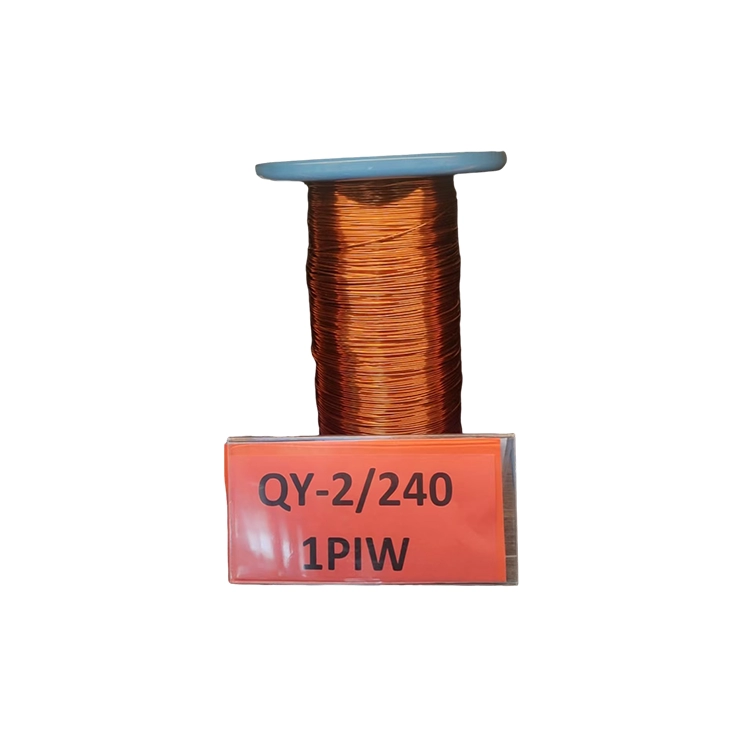
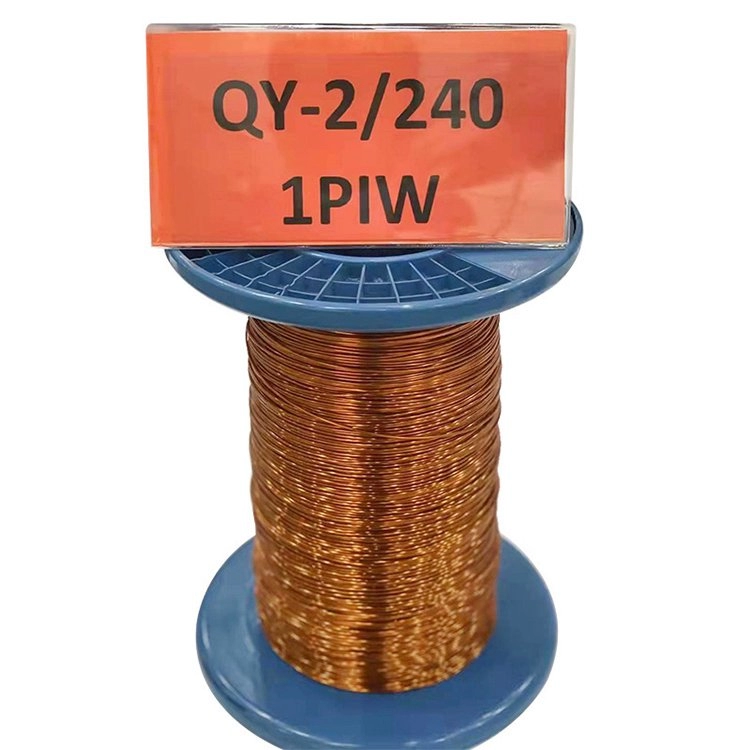
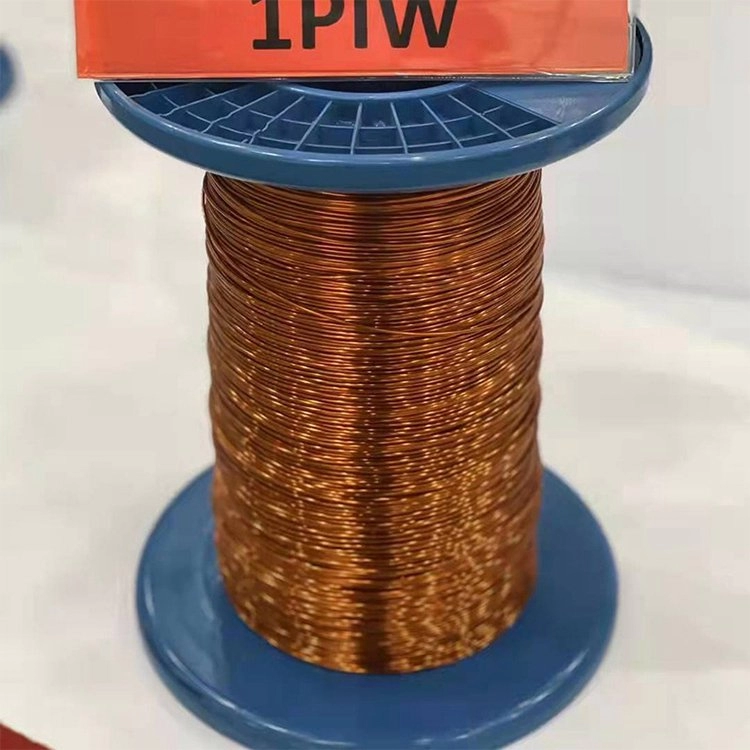
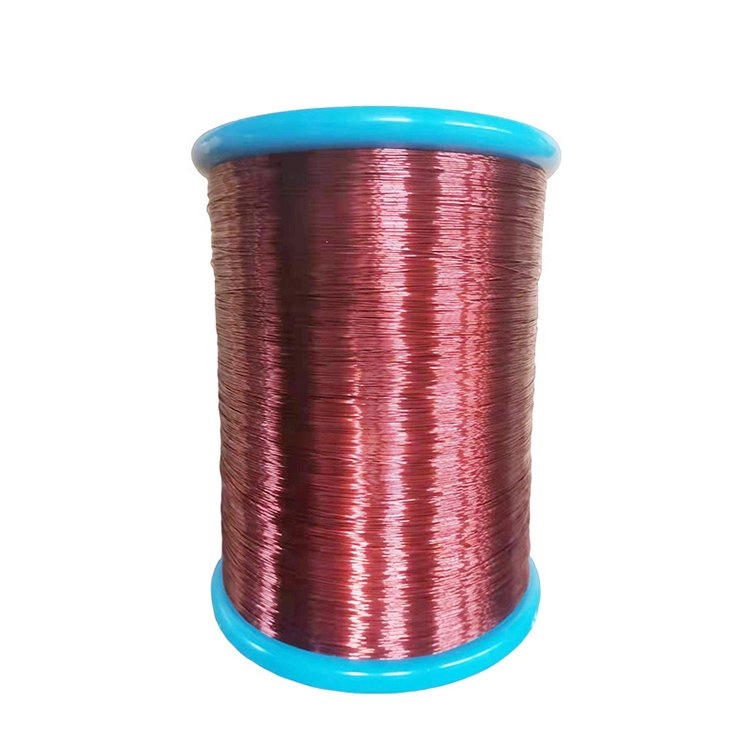
Huaya Fa supplies corona-resistant and high thermal class enameled wire, including polyamide-imide and polyimide grades up to class 240, in round and rectangular profiles with copper, aluminium or copper-clad aluminium conductors. Round wire is produced from 0.03 mm to 3.50 mm, with ISO 9001 and ISO 14001 certified manufacturing and RoHS and REACH compliance.
Because inverter duty requirements vary considerably between applications, we recommend sharing the drive parameters and duty profile with the wire supplier at the specification stage. The same nominal wire grade can perform very differently depending on how the drive and the winding interact.