
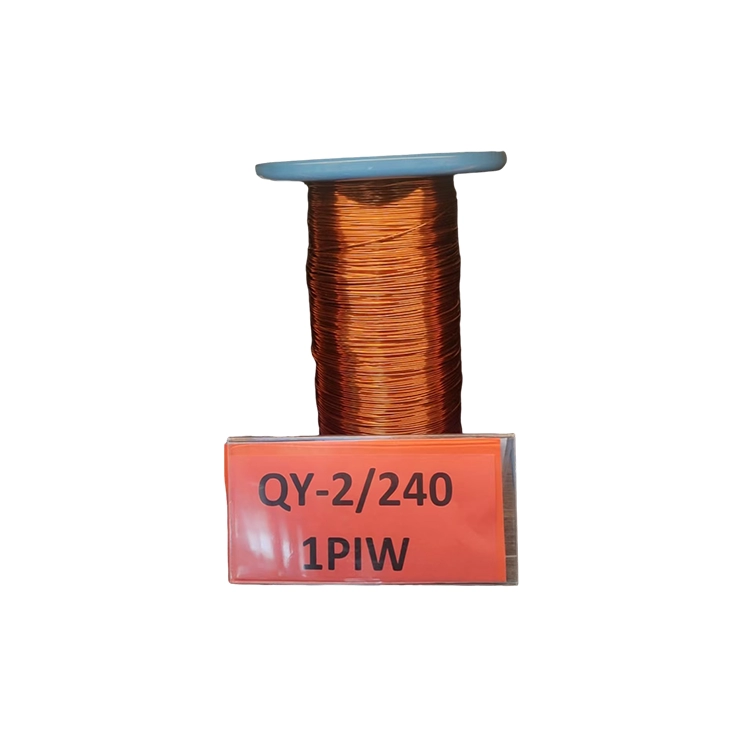
Magnet wire is a commodity with an engineering component, and 2026 is a year in which the commodity side is doing most of the talking. Copper remains the dominant cost element in a copper magnet wire order, enamelling capacity is tight on several high-temperature grades, and freight routing continues to add variability that has nothing to do with the wire itself.
This update sets out what buyers should plan for, and the procurement tactics that are actually useful when prices and schedules are moving.
Copper Remains the Cost Driver
On a copper magnet wire order, the conductor typically accounts for the large majority of the delivered cost. That has two consequences worth internalising:
- Your unit price will move with the copper market regardless of how competitive the converting step is. Suppliers who claim otherwise are usually building a buffer into the quote.
- The value of a well-negotiated conversion charge is real, but it is a minority of the total. Buyers who focus exclusively on the conversion premium are optimising the small number.
The practical response is a pricing mechanism rather than a fixed price. Most reputable suppliers will offer a structure with a copper element referenced to a published market average over an agreed quotation window, plus a fixed conversion charge. This is fairer to both sides than a fixed price that has to carry a volatility premium.
If your contract does use a fixed price, agree the validity period explicitly and diarise the renewal. A fixed price that expires silently is the most common source of an unexpected increase on a repeat order.
Enamelling Capacity in 2026
Capacity is not uniformly tight. The picture varies sharply by product family:
| Product family | Capacity situation | Buyer implication |
|---|---|---|
| Standard 130 – 180 °C round copper | Adequate | Normal lead times; competitive pricing |
| Aluminium and CCA round | Adequate, regional variation | Confirm conductor availability for non-standard gauges |
| 200 °C and above | Tighter | Book capacity earlier; expect longer sample cycles |
| Self-bonding | Tighter | Bond-coat capacity is a distinct constraint from enamelling |
| Flat / rectangular | Tighter still | Profile tooling adds a further scheduling step |
| Ultra-fine below 0.05 mm | Specialist, limited | Plan on longer qualification and longer lead times |
Two structural reasons sit behind the tightness at the top end. First, high-temperature enamels require more passes and slower line speeds, so a given line produces fewer kilograms per hour. Second, the applications that need those grades — inverter-duty motors, EV traction, high-efficiency compressors — are among the fastest-growing demand segments.
For buyers this argues for earlier engagement. A specification that is confirmed two months before the required delivery date has a materially better chance of hitting the schedule than the same specification confirmed four weeks out.
Freight and Routing
Ocean freight on the main Asia-to-Europe and Asia-to-North-America lanes continues to behave unpredictably. Beyond the rate itself, three factors affect magnet wire specifically:
- Container availability at peak — the wire production schedule may be met while the container slips.
- Transit time variation — a two-week swing on a six-week route changes your safety-stock calculation.
- Moisture exposure — longer transits and repeated condensation cycles raise the risk of surface corrosion on aluminium and CCA conductors.
The mitigation is not complicated: build moisture protection into the packing specification, and treat transit time as a variable with a range rather than a fixed number when setting safety stock.
Practical Procurement Tactics
Five measures that make a measurable difference in the current environment:
| Tactic | What it does |
|---|---|
| Copper-linked pricing with a defined averaging window | Removes the volatility premium from the quote |
| Rolling 12-week forecast, non-binding | Moves your order into the production plan earlier |
| Dual-qualified specification | Lets you switch between two acceptable thermal classes or conductors |
| Annual quantity with scheduled releases | Lowers unit price and avoids repeated setup charges |
| Pre-shipment inspection clause | Catches packing and labeling issues before the container is sealed |
The dual-qualification tactic deserves emphasis. If your design can accept either a 180 °C or a 200 °C build — or either copper or CCA on a short-run application — you give yourself a substitution route when one family is congested. The engineering work happens once, at design stage, and pays back every time the market tightens.
What Not to Do
Two common responses make the situation worse. Chasing the lowest quote each cycle destroys the supplier relationship that gets you priority when capacity is tight, and it usually signals a specification that is not fully controlled. Equally, holding minimal safety stock to reduce working capital leaves no buffer against a transit swing or a slip in the enamelling schedule.
The middle path — a qualified supplier, a copper-linked price, a forecast, and enough safety stock to absorb one transit cycle — costs a little more on paper and far less in total.
Planning 2026 requirements? We manufacture enameled and magnet wire in copper, aluminium and CCA across 130 – 240 °C, with ISO 9001, ISO 14001 and RoHS documentation. Send us your forecast and specification and we will confirm realistic lead times by product family.