
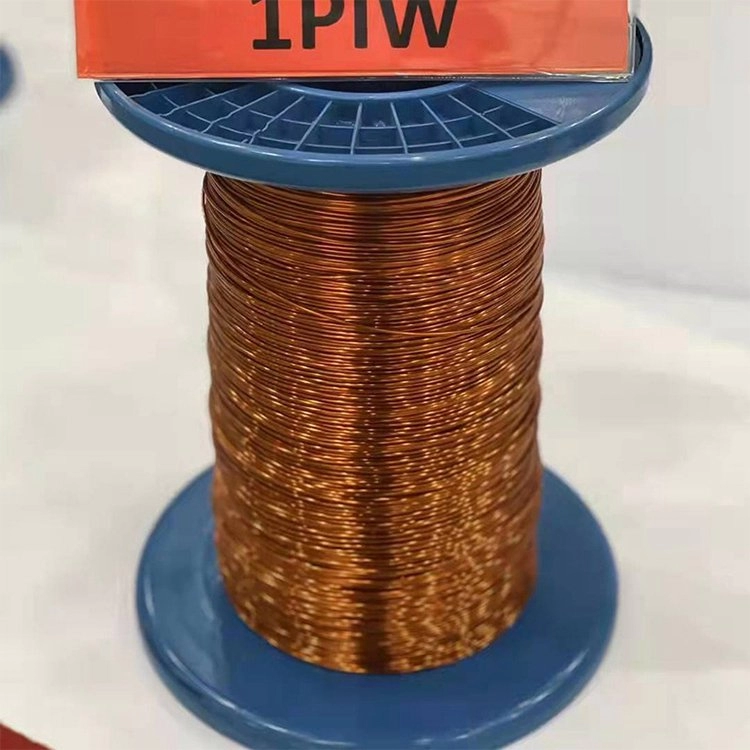
Home appliance motors are built at volumes that make small inefficiencies expensive. A washing-machine motor line may produce thousands of stators per shift, and a wire that winds 0.5% slower, or generates slight dimensional drift between batches, shows up immediately as lost output or scrap.
This case covers a multi-plant appliance motor programme and what that customer required from magnet wire supply. It is a useful counterpoint to high-specification failure analysis, because here the challenge is not exotic — it is consistency at volume.
The Programme
| Parameter | Detail |
|---|---|
| Products | Washing-machine motors, fan motors, small pump motors |
| Volume | High, continuous, multi-plant |
| Wire types | Polyurethane (UEW) and polyester (PEW) copper round |
| Thermal class | 130 / 155 °C |
| Diameter range | 0.20 – 0.80 mm |
| Spool format | Machine-mounted, high-speed pay-off |
| Supply model | Scheduled releases against an annual forecast |
The specification is deliberately conventional. Appliances are cost-sensitive and the thermal duty is modest, so polyurethane and polyester builds are the right answer. The engineering challenge sits entirely in consistency and supply.
Requirement 1: Dimensional Consistency
The customer's acceptance criterion was not a wide tolerance band but a tight distribution within it. The distinction matters: a supplier can meet a tolerance band while drifting across it, and the appliance maker will see the effect as a periodic winding parameter adjustment.
What the programme required:
- Conductor diameter controlled on a statistical basis, with process capability reported, not just pass/fail against limits.
- Insulation build thickness held consistently — this is the property that changes the outer diameter and therefore the effective slot fill.
- Batch-to-batch record of the measurements supplied with the shipment, so the customer could correlate any winding drift with incoming wire data.
- A commitment to notify before changing any process parameter that could affect these measurements.
The notification commitment was the item the customer valued most. A supplier who changes an oven setting or a die without telling the customer turns a controlled process into an uncontrolled one from the customer's perspective, even if the wire remains in specification.
Requirement 2: Windability at Speed
Appliance stators are wound at high speed with high tension. The enamel must survive that without cracking, and the winding machine must be able to pay the wire off without tension spikes.
| Property | Why it matters on a fast line |
|---|---|
| Elongation | Low elongation means breaks during the winding acceleration |
| Adhesion | Poor adhesion allows the film to split at tight bend radii |
| Flexibility / mandrel test | Predicts cracking at the winding nose |
| Surface friction | Affects pay-off tension and layer formation |
| Spool winding quality | A badly wound spool causes snags and tension spikes |
The pragmatic test is to wind trial coils on the customer's own equipment. Laboratory flexibility tests narrow the field, but a spool that pays off badly will fail a high-speed line even when every laboratory number is in specification.
Requirement 3: Spool Format and Packing
For machine-mounted pay-off, the spool is part of the production equipment. The programme specified:
- A fixed spool type and bore diameter across all plants, so the same fixture works everywhere.
- Consistent net weight per spool, so the machine's run-out scheduling and operator workload are predictable.
- Layered winding with no loose outer turns, to avoid snags on acceleration.
- A label positioned so it is readable with the spool mounted — not hidden behind the fixture.
- Returnable spool option for the closest plant, to reduce packaging waste and freight volume.
The consistent net weight point is easy to overlook. If spool weights vary by 15%, either the operator is changing spools at unpredictable intervals or the machine runs out mid-cycle. Both reduce output.
Requirement 4: Multi-Plant Supply Reliability
The programme ran across several plants on different continents, which created three supply challenges:
| Challenge | Solution applied |
|---|---|
| Different plants, same specification | One controlling specification document, referenced on every PO |
| Different spool handling equipment | Single agreed spool format, with local variations documented |
| Different documentation requirements | Standard document pack, plus plant-specific declarations on request |
| Demand variability by region | Rolling forecast per plant, consolidated into one production plan |
| Transit time differences | Plant-specific safety stock calculated from route, not a global figure |
Consolidating the forecast while keeping plant-level visibility is the balance that makes this work. The supplier schedules against the total, and each plant retains its own delivery rhythm.
Results and Transferable Practice
The programme settled into a stable supply pattern, with the following practices doing most of the work:
- Process capability reporting alongside pass/fail acceptance — it catches drift before it becomes rejects.
- A change-notification clause covering any process parameter affecting the delivered dimensions.
- Trial winding on the customer's equipment as a standing part of qualification, not a one-off.
- One spool format and one controlling specification across all plants.
- Plant-level safety stock derived from actual route transit times.
None of these are exotic. They are the disciplines that separate a magnet wire supplier who can support volume appliance production from one who can only supply a technically correct product. For a buyer, the questions to ask are whether capability data is available, whether change notification is contractual, and whether the supplier will run trial coils on your equipment before the first production order.
Supplying a volume appliance motor programme? We manufacture UEW, PEW and other enameled copper and aluminium wire for appliance motors, with process capability reporting, batch test records and a change-notification commitment. Send us your specification and annual volume for a quotation with a proposed release schedule.